
How we work
Measure
Making competence visible through technology
We measure competence at two levels. At the programme level, we design evaluation frameworks that track whether 21st-century competencies are being developed across cohorts and sites. At the individual level, we are now delivering our AI-powered assessment engine — technology that analyses learner submissions and generates competency-based skills reports.

This makes competence visible, understandable, and trusted — for learners, teachers, systems, and employers.
System shifts

Impact measurement
moves from counting activities to evidence-based competency outcomes that show where programmes are working and where gaps remain.
Learning design
moves toward project-based, integrative tasks because these can now be recognised as powerful developers of 21st-century skills.

Case Study
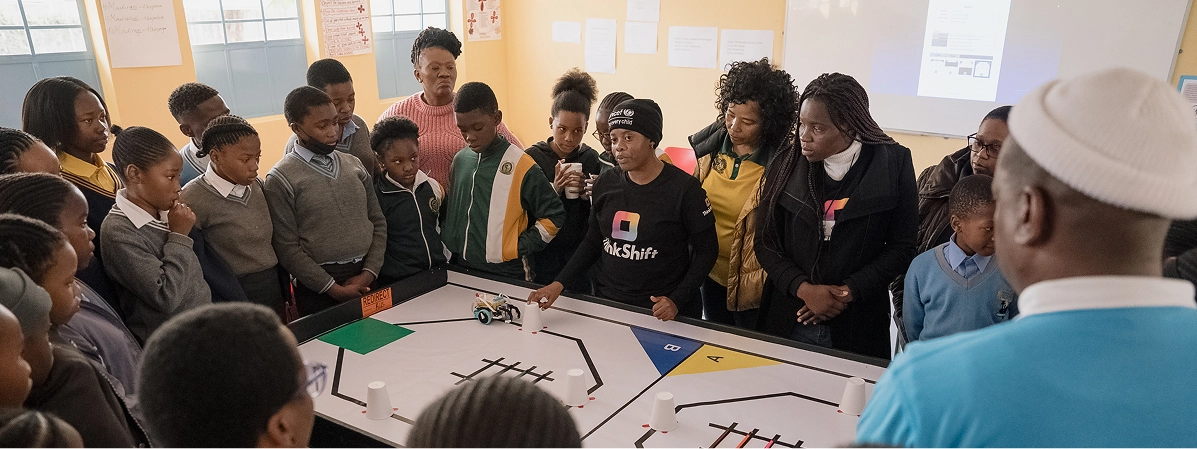
UNICEF Girls in STEM Action Research
In partnership with UNICEF South Africa, we are conducting action research to evaluate the effectiveness of the Coding and Robotics pilot programme in enhancing STEM skills among participating girls. This research measures:
- Changes in girls' coding proficiency and robotics skills throughout the programme
- The impact of programmatic involvement on STEM subject choice
- Key success factors and challenges in addressing gender-based barriers in STEM education
- Insights for scaling gender-inclusive STEM education practices



Partner with us
Whether you are a government department, development agency, foundation, corporate, or school network, we are ready to work with you.


ThinkShift Education Solutions · South Africa · © 2025
made with 💜 by jack